A U.S.-Mexico Partnership Beat Screwworms Once. Why Are They Back?

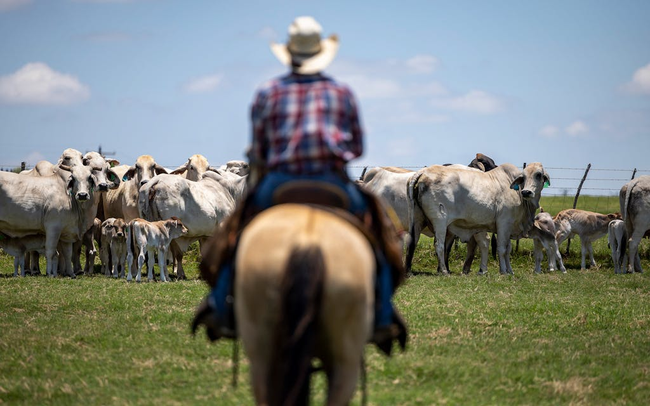
Moisés Vargas-Terán remembers the odd remedies ranchers once used to battle the New World screwworm. In Mexico, they’d rub traditional herbs on wounds into which the insect had burrowed to lay eggs so that its larvae could feast on the living tissue of cattle. Some U.S. livestock producers, meanwhile, poured engine oil on the cuts. The larvae would seep out—but then crawl into the soil and emerge later as flies. “[Ranchers] would say, ‘You’ll never eradicate the screwworm because this came from my grandfather and father, and this is forever,’ ” he recalled.
Those old-fashioned measures came before the advent of COMEXA, the Mexican–United States Commission for the Eradication of Screwworm, in 1972. Vargas-Terán, who lives in Mexico City, was an animal health officer with the commission. He monitored the screwworm population in Mexico; teamed up with NASA’s Johnson Space Center, in Houston, to predict the pest’s spread with satellite sensors; and helped oversee the production and dispersal of sterile flies as an eradication measure.
In 1982 the United States was declared screwworm-free. Mexico earned the designation in 1991. COMEXA’s work had also eliminated the ranchers’ fears that their children and grandchildren would never be free of the problems brought by screwworms, which have led to agonizing deaths for thousands upon thousands of animals and steep monetary losses for countless ranchers.
Those fears were given renewed life on June 3, when the U.S. Department of Agriculture announced that a three-week-old calf in Zavala County was infected with screwworm. As of June 29, 27 U.S. cases had been confirmed, all but one of them in Texas. Experts had worried about this eventuality ever since the pest returned to Mexico in November 2024. In a press release, USDA undersecretary Dudley Hoskins declared that “the United States has defeated this pest before, and we will do it again.”
But the U.S. might not be facing another war on screwworms—at a cost of more than $1 billion—if it hadn’t abandoned its joint effort with Mexico. In 2012, after forty years, the countries terminated COMEXA. A sterile-fly production plant in the southern Mexico state of Chiapas was closed. Both moves stemmed from a desire to cut costs, given the eradication of screwworm in North and Central America. The commission can be seen as a victim of its own success. Why maintain an army when there’s no enemy in sight?
Vargas-Terán and some other experts believe that the U.S. and Mexico would’ve been better off today if COMEXA were still active. The commission could have better coordinated with Central American nations when the screwworm began spreading northward from there, in 2023, and could have used the Chiapas facility to saturate North America with sterile flies.
The flesh-eating pest has returned at a time of increased U.S. isolationism and distrust in science. President Donald Trump’s White House has feuded with Mexico and other allies while slashing budgets for numerous government programs and staff, including at the USDA.
The United States’ original victory over screwworm was rooted in Texas. In the late fifties and early sixties, the state’s livestock industry began raising funds and lobbying for government assistance to launch a sterile-fly breeding program. USDA entomologists Raymond Bushland and Edward Knipling, a Port Lavaca native, had used X-rays from a military unit near San Antonio to sterilize screwworms. They discovered that these flies would still seek to reproduce. Screwworm females mate only once in their lifetimes, so if they paired up with sterile males—released in huge quantities to overwhelm wild males—they’d lay eggs that wouldn’t hatch. This could decimate the population.
The USDA was soon pumping out up to 150 million flies each week at a facility in Edinburg. These were deployed to produce a biological barrier of sterile flies along the U.S.-Mexico border, as well as for strategic drops near outbreaks. Aware that screwworms could fly as far as 180 miles, livestock groups in the U.S. and Mexico started lobbying for formal cooperation between the countries’ governments, eventually leading to the creation of COMEXA.
Through the commission, the U.S. and Mexico produced sterile flies, distributed information to ranchers, and collected and studied samples from infected livestock. The United States provided planes and ships and bore 80 percent of all COMEXA costs. But the high-level leadership and supervisory roles were basically split fifty-fifty, Vargas-Terán said.
COMEXA aimed to move the sterile-fly biological barrier from Mexico’s northern border to the Isthmus of Tehuantepec, near its southern border. In 1976, the countries opened a fly factory in nearby Chiapas that produced up to 500 million flies a week. The bigger plant and the southern barrier were key to the successful eradication in both countries.
The commission later established screwworm programs with Central American countries, including Belize and Guatemala, which saw their last screwworm cases in the nineties (until the new outbreaks, which began in 2023). Eventually, these efforts pushed the biological barrier into the forested Darién Gap, between Panama and Colombia. In 2006, the U.S. and Panama jointly opened a sterile-fly facility in the region that can produce up to 100 million flies weekly.
The screwworm problem had been shunted farther south, but also further out of the minds of Americans.
With screwworms no longer a problem in the U.S., the program became vulnerable to pressures from Congress and the Obama White House in the wake of the Great Recession. Between 2010 and 2012, the USDA’s operating budget was reduced by $3 billion, or 12 percent. The department’s screwworm funding fell from $27.7 million to $20.2 million between 2011 and 2012. Edward Avalos, then the undersecretary of agriculture for marketing and regulatory programs, gave a statement to a congressional committee in which he indicated that the success of several pest-eradication efforts, including the screwworm program, allowed for the budget tightening.
In 2012 he signed an agreement with Mexico that dissolved COMEXA, letting go of the collaborative scientists, program managers, field supervisors, and technical staff from both countries that it had employed. All of the commission’s equipment in Mexico was turned over to the Mexican government, including the Chiapas fly factory. After the completion of the Panama plant, in 2006, the Chiapas facility had been maintained as a backup for emergency outbreaks, producing about 10 million flies each week at an annual cost of about $4 million, according to the USDA. But Mexico closed it in April 2013, leaving the Panama plant as the continent’s lone sterile-fly production facility. The U.S. continued to jointly operate that plant and funded screwworm research.
The dissolution of COMEXA barely registered with the Beltway elite, much less the general public. But the end of the commission caught the attention of Neal Wilkins, president and CEO of the East Foundation, a San Antonio–based land-stewardship and ranching organization. At the time of COMEXA’s dismantling, he’d observed that the USDA was “trimming back a lot of stuff, and that one seemed a little bit reckless,” given the relatively small investment that would have been required to continue formal cooperation with Mexico and maintain the backup sterile-fly facility, compared to the $1.5 billion in estimated annual savings for U.S. livestock producers attributed to a screwworm-free North America.
He believes his concerns were validated over the last two years and that a functioning, ramped-up plant in Chiapas could’ve saturated the region with millions more flies. “If we would have had that facility in Mexico in Chiapas, we would have been able to catch this, keep it from even getting up into northern Mexico, and driven them back south of Panama,” said Wilkins, whose organization is also part of the Screwworm Coalition of Texas, which consists of groups representing livestock producers and landowners.
Maxwell Scott, a North Carolina State University entomologist who’s researched the screwworm, agreed that a production facility in Mexico would’ve improved the handling of the outbreak. “But, you know, that’s hindsight,” he said. Another screwworm expert, Texas A&M entomologist Phillip Kaufman, said that having all of the production in Panama, particularly given the facility’s limited capacity, was not “the wisest thing we could’ve done.” But he added that sterile-fly plants are highly complex and require significant upkeep, making it difficult to justify keeping them open when budget concerns are paramount.
With a weekly capacity of 100 million sterile flies at the Panama plant, the U.S., Mexico, and Central American countries “simply don’t have enough insects to release” to saturate the wild male population and re-eradicate the screwworm, Kaufman said. The Texas outbreaks alone require up to 4 million sterile flies per week in each county where screwworms have been detected—ten counties so far—until about three months after the last fly has been detected.
More sterile flies are on the way—but it will take a while. Mexico, with a $21 million assist from the U.S., is slated to open a screwworm-production plant, converted from a fruit fly–breeding facility, this summer in Chiapas. Over the past several years, the U.S. has allotted more than $350 million for surveillance, increasing production in Panama, and new research projects. It’s also spending $750 million for a new sterile-fly production plant with a weekly capacity of 300 million in Edinburg, scheduled to be finished in fall 2027. Whatever the cost of maintaining the original Chiapas plant over the last thirteen years would have been, Wilkins said, “it’s got to be less than three-quarters of a billion dollars.”
Beyond the end of fly production, the end of COMEXA also meant less expertise readily available for supporting Central American countries, said Vargas-Terán. And Wilkins heard from USDA employees who felt hamstrung working with Mexico after the 2024 appearance of screwworm because of the lack of formal agreements between the two countries. “They would tell you that they have no structure under which they were working. They were having to invent it along the way,” he said. A spokesperson for the USDA told Texas Monthly that it had worked closely with Mexico’s food and agriculture agency (Senasica) in responding to screwworm. “Due to this coordination, we were able to keep NWS below the southern border for a year longer than most models projected, and we will continue to coordinate in our efforts to drive this pest back,” the spokesperson said.
Fortunately, the USDA didn’t eliminate all funding for screwworm research, and scientists working with the Knipling-Bushland U.S. Livestock Insects Research Laboratory, in Kerrville, have developed new techniques for battling them. Scott, the North Carolina State professor, helped create a male-only screwworm strain, which would essentially double a plant’s capacity, because past strains have contained males and females. Genetic engineering could also allow for breeding screwworms that carry dominant traits for things such as laying eggs in dead rather than live animals or birthing only males, which would eventually kill the species off entirely. Wilkins and Kaufman are pleased with the USDA’s recent response and optimistic that the U.S. will be able to handle the crisis. But the effort will take years.
Vargas-Terán notes that it will also require a strong international relationship. Working alone, Mexico and the United States can achieve control, but eradication, he believes, will take something like COMEXA. And, unlike last time, he hopes the countries will stick together long after the problem is solved.
Texas Monthly